 Engagement Rings
 Wedding Rings
 Fine Jewelry
 CUSTOM DESIGN
 Diamond
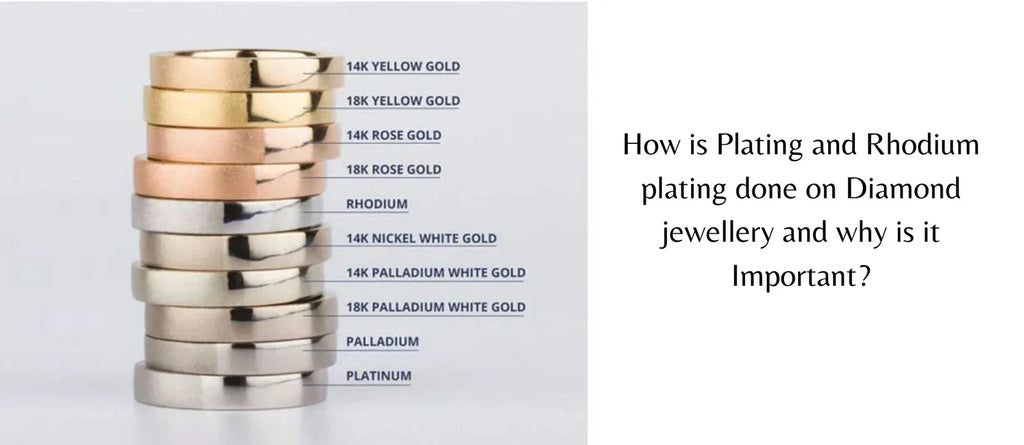
How Is Plating and Rhodium Plating Done on Diamond Jewellery & Why Is It Important?
How Is Plating and Rhodium Plating Done on Diamond Jewellery & Why Is It Important?
Diamond jewellery is admired for its brilliance, elegance, and timeless appeal. But behind that flawless shine lies an essential finishing process plating, especially rhodium plating. This invisible layer plays a major role in enhancing beauty, durability, and value. Let’s explore how plating is done, what rhodium plating is, and why it’s so important for diamond jewellery.
What Is Plating in Diamond Jewellery?
Plating is a surface finishing process where a thin layer of metal is deposited onto jewellery to improve its appearance, shine, and resistance to wear. In diamond jewellery, plating is commonly applied over gold or silver to enhance color uniformity and protect the base metal.
Common plating types include:
-
Rhodium plating (most popular)
-
Gold plating
-
Rose gold plating
-
White gold plating
Among these, rhodium plating is considered the premium choice for diamond jewellery.
What Is Rhodium Plating?
Rhodium is a rare, precious metal from the platinum family. It is naturally bright white, highly reflective, corrosion resistant, and extremely durable - making it ideal for diamond jewellery.
Rhodium plating gives jewellery:
-
A mirror like white finish
-
Enhanced diamond brilliance
-
Protection from scratches and tarnish
That’s why most white gold diamond rings, earrings, pendants, and bracelets are rhodium plated.
How Is Rhodium Plating Done on Diamond Jewellery?
The rhodium plating process is precise and carefully controlled to protect diamonds while achieving a flawless finish.
Step by Step Rhodium Plating Process
1. Deep Cleaning
The jewellery is thoroughly cleaned using ultrasonic cleaners and chemical solutions to remove:
-
Oils
-
Dirt
-
Polishing residue
A clean surface ensures perfect adhesion of rhodium.
2. Acid Activation
The piece is dipped in a mild acid bath to activate the metal surface. This step helps the rhodium bond evenly to the jewellery.
3. Electroplating
-
Jewellery is submerged in a rhodium solution.
-
An electric current is passed through the solution.
-
Rhodium particles bond to the jewellery’s surface.
The plating thickness is usually 0.1 to 0.3 microns, thin yet powerful.
4. Rinsing & Drying
After plating, the jewellery is rinsed with distilled water and gently dried.
5. Final Inspection & Polishing
Experts inspect the finish and lightly polish the piece to ensure:
-
Even coating
-
High shine
-
No damage to diamonds or settings
Why Is Rhodium Plating Important for Diamond Jewellery?
1. Enhances Diamond Sparkle
Rhodium’s bright white finish reflects more light, making diamonds look whiter, brighter, and more brilliant.
2. Improves Appearance of White Gold
White gold has a slightly yellow tint. Rhodium plating gives it a pure platinum like white color.
3. Prevents Tarnish & Oxidation
Rhodium does not oxidize, protecting jewellery from:
-
Discoloration
-
Tarnish
-
Environmental damage
4. Increases Durability
Rhodium is harder than gold, adding an extra protective layer that:
-
Reduces scratches
-
Slows everyday wear
5. Skin Friendly & Hypoallergenic
Rhodium plating covers nickel or alloy metals, making jewellery safer for sensitive skin.
6. Enhances Luxury & Value
Rhodium plated jewellery looks more premium, making it highly desirable in luxury and bridal collections.
How Long Does Rhodium Plating Last?
Rhodium plating is not permanent. Its lifespan depends on:
-
Frequency of wear
-
Skin chemistry
-
Jewellery type
Average durability:
-
Rings: 6–12 months
-
Earrings & pendants: 1–3 years
Re-plating is simple, affordable, and restores jewellery to a like-new finish.
Does Rhodium Plating Affect Diamonds?
No. Rhodium plating is safe for diamonds. Skilled jewellers ensure:
-
Diamonds remain secure
-
No change in diamond color or clarity
-
Enhanced brilliance due to reflective finish
Rhodium Plating vs Platinum Jewellery
| Feature | Rhodium Plated White Gold | Platinum |
|---|---|---|
| Color | Bright white | Natural white |
| Cost | More affordable | Expensive |
| Maintenance | Needs re-plating | Low maintenance |
| Weight | Lighter | Heavier |
| Shine | Very high | Soft, natural glow |
How to Care for Rhodium Plated Diamond Jewellery
-
Avoid harsh chemicals and perfumes
-
Remove jewellery during workouts and cleaning
-
Store separately in soft pouches
-
Clean gently with mild soap and water
Proper care extends plating life and keeps diamonds sparkling.
Frequently Asked Questions (FAQs)
Q1. Is rhodium plating necessary for white gold diamond jewellery?
Yes. White gold naturally has a yellow tone. Rhodium plating gives it a bright white finish and enhances diamond brilliance.
Q2. Can rhodium plating wear off?
Yes. With daily wear, especially on rings, plating can wear off over time and may need re-plating.
Q3. Is rhodium plating expensive?
No. Re-plating is relatively affordable compared to replacing or repairing jewellery.
Q4. Can yellow gold jewellery be rhodium plated?
Yes. Yellow gold can be rhodium plated to achieve a white gold or platinum like appearance.
Q5. Is rhodium plating safe for sensitive skin?
Absolutely. Rhodium is hypoallergenic and ideal for people with metal sensitivities.
Q6. Does rhodium plating change diamond color?
No. It enhances the appearance by reflecting light, making diamonds appear brighter and whiter.
Q7. How often should rhodium plating be redone?
Typically every 6-12 months for frequently worn rings and less often for earrings or pendants.